Necrotizing Fasciitis and the Spectrum of Soft Tissue Infections
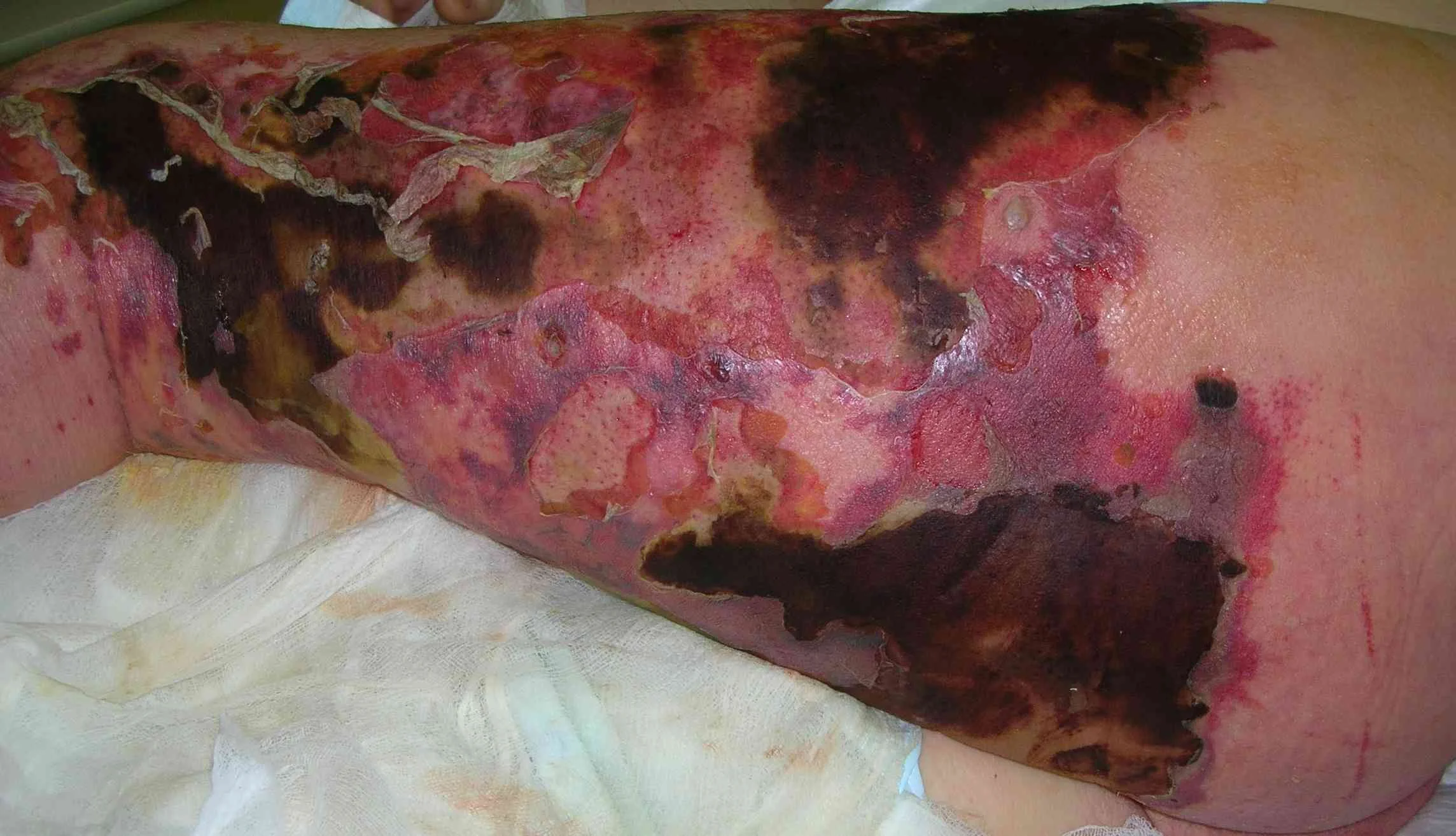
/In this post, we discuss necrotizing fasciitis and whether the LRINEC score is a useful decision-aid for the emergency physician when this disease is suspected.
Read Moreemergency medicine tamed
Taming the SRU. The SRU is the "Shock Resuscitation Unit." It is a crucible of clinical training for the residents of the University of Cincinnati Emergency Medicine Residency training program.
In this post, we discuss necrotizing fasciitis and whether the LRINEC score is a useful decision-aid for the emergency physician when this disease is suspected.
Read MoreYou’re deep into a busy shift. Pushing yourself to see more volume towards the end of the year, you find yourself actively managing 8 patients. You have 2 patients with difficulty breathing you believe have COPD exacerbations and 1 patient with a history of T1DM who has a critical high finger stick blood sugar and ketones in their urine. You send VBGs as part of the work up for all these patients finding hypercarbia for the patients who have COPD exacerbations and a significant metabolic acidosis in the patient with T1DM confirming your diagnosis of DKA. You are in the process of admitting these patients when you face questions from your colleagues in-house as to why you didn’t perform an ABG on these patients?
Read MoreIs the KUB a relic of an era of simpler diagnostics or a viable alternative to the cost and radiation of cross-sectional imaging? Join Dr. Skrobut as he parces through the indications, pathologies and literature of the abdominal plain film.
Read MoreEmergency medicine physicians frequently assess and treat patients who have accidental or intentional poisonings. United States poison centers receive over two million case referrals per year. And, about 20% of these poisonings present to an Emergency Department for evaluation. Evaluation of these patients always includes a history and physical, but further testing can provide valuable information. Blood work is often be needed, but an EKG is a faster, cheaper tool that can provide key pieces of information prompting early interventions.
Read MorePelvic Xrays are a key component of trauma, fractures and dislocations seen every day in the ED, but when is the last time you went back over the anatomy and radiographic tips and tricks of the pelvic radiograph? Join Dr. Mand's thorough break down of this commonly used ED diagnostic - the Pelvic XR.
Read MoreWhile formal pulmonary function testing is not often (if ever) performed in the ED, many patients with a history of COPD, asthma, CHF, sarcoidosis, etc, have had pulmonary function testing performed in the past. Having an understanding of the underlying pathophysiology of these conditions, physiology of the lungs and respiration, and understanding of how the testing is performed is critical to being able to appropriately interpret the results of these test and apply the test results to our patients.
Read MoreThyroid studies, often lying in the depths of any medical student differential, are an important tool in the Emergency Physician's toolkit, and knowing what to order when is a key part of using them wisely. This week, Dr. Makinen gives us a breakdown of thyroid pathology and testing.
Read MoreGiven the morbidity of sickle cell disease, these patients frequently present to the emergency department, raising questions of: what laboratory testing is needed in these patients? And, how do we interpret commonly ordered labs in these patients? This article will discuss the basic principles of these commonly ordered studies in hopes of delineating when they are necessary and how they can help in the evaluation of the sickle cell patient presenting to the emergency department.
Read MoreIt's late into your shift when a 12 month-old rolls into your trauma bay and have reproducible abdominal pain. Do you go straight to CT? LFTs? UA? Dr. Shan Modi takes us through the literature and utility of laboratory studies and EKGs in pediatric trauma.
Read MoreLast week we introduced to you a primer on the interpretation and detection of heart blocks on EKGs. Now you can test out your knowledge with some cases based on the information in the previous post!
Read MoreWe order and interpret numerous EKG’s during our shifts in the emergency department. EKG interpretation is one of the skills we need to be competent in and comfortable with as an emergency medicine physician. STEMI’s, ischemic changes and arrhythmias are some of the most important findings we focus on, and although straightforward, heart blocks can be easily overlooked. The goal of this post is to go over some of the most common and clinically relevant conduction blocks, how to manage them and what their disposition are.
Read MoreProcalcitonin was reviewed on Taming the SRU in the context of other biomarkers (ESR, CRP) last year with a grand rounds discussion of its utility in the setting of a febrile 7 week old. As procalcitonin has continued to gain traction in the world of pediatric EM – receiving evaluation as part of proposed protocols for management of febrile infants (1) and for its utility as an aid to diagnosis of Serious Bacterial Infection (2,3) – we turned our attention this year to procalcitonin’s use in adults. Procalcitonin testing has been studied and available for decades (as St. Emlyn’s noted in an update earlier this year), but has not really established itself in widespread use in adults (as EMDocs noted in a sepsis update in 2014). In this blog post, we take the approach of going back to what is known (and is NOT known) about the biochemical basics of this molecule to give context to the sometimes confusing smorgasbord of proposed applications for procalcitonin testing that exists in the literature.
Read MoreIn March 2015, Dr. Renne did a Grand Rounds lecture on soft tissue neck radiographs, which offers a great review of normal anatomy and systematic approach to reading films (“CHESS”). Yet, in my small, informal (not scientific at all) poll of some of our residents, none had ever ordered a soft tissue neck film. Are soft tissue neck radiographs useful? You be the judge.
Read MoreIt’s a typical shift in your community shop when you see a patient on the board that makes you nervous. 2 year old male with syncope. It’s been awhile since you have treated someone born in the 21st century and you know this child’s workup will likely involve an EKG. The closest pediatric hospital is 2 hours away. How comfortable do you feel interpreting the squiggle lines generated by this little heart?
Read MoreIf the chief complaint of your patient is abdominal pain, altered mental status, overdose, generalized weakness chances are you at least considered ordering a hepatic panel. In fact, studies show that the hepatic panel is the third most common laboratory test ordered in the emergency department only behind the CBC and renal panel. If emergency medicine physicians are so quick to order this test, it is important to also know how to interpret all the little red arrows that often accompany your results. For this we will review each component and even (wait for it) … a little biochemistry!
Read MoreSRU (pronounced "shrew") = Shock Resuscitation Unit
Training in, and managing, the SRU is one of the crown jewels of our residency. It is where the sickest of the sick patients are found in our ED. It is a crucible, a test of knowledge and strength, and a true manifestation of the tripartite mission of our department: Leadership, Excellence, and Opportunity.
Check out AI contexted information from this and other great FOAMed sites via FOAMCortex