
Annals of B Pod: Sarcoidosis Optic Neuropathy
/Find out what to look for in sarcoidosis optic neuropathy as Dr. Crawford leads us through an interesting case of unilateral painful vision loss.
Read Moreemergency medicine tamed
Taming the SRU. The SRU is the "Shock Resuscitation Unit." It is a crucible of clinical training for the residents of the University of Cincinnati Emergency Medicine Residency training program.
Find out what to look for in sarcoidosis optic neuropathy as Dr. Crawford leads us through an interesting case of unilateral painful vision loss.
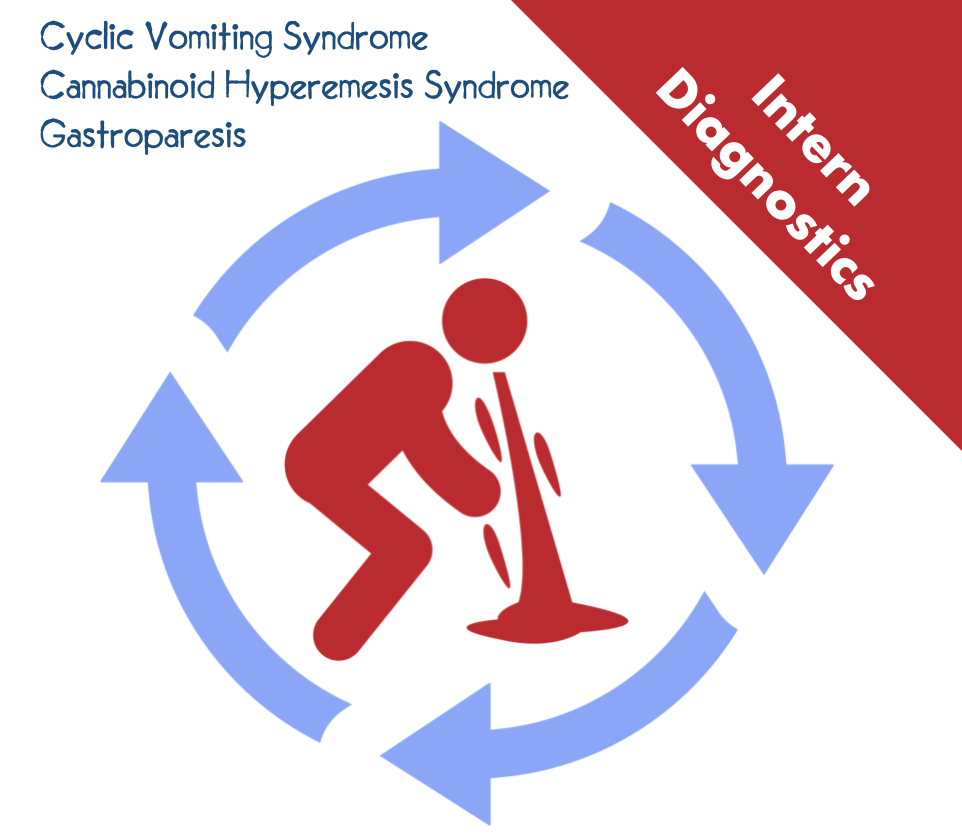
Read MoreNausea and vomiting accounts for one of the most frequent chief complaints we see in the emergency department. For those presenting with another complaint, N/V is often an associated symptom. Treatment of these symptoms not only improves patient satisfaction, but also decreases associated complications, like dehydration and electrolyte abnormalities.
The etiology behind a patient’s N/V is highly variable, with a broad differential that stretches across all organ systems. Although often an acute presentation, N/V is increasingly being linked to set of chronic disorders, such as gastroparesis (GP), cyclic vomiting syndrome (CVS) and cannabinoid hyperemesis syndrome (CHS). While the work-up and initial evaluation in the ED is similar for all, specifically ruling out potentially life-threatening diagnosis or complications, the clinical presentation and management vary subtly between these syndromes.

Read MoreThis week’s Grand Rounds featured some amazing content! Starting with Dr. Paulsen, our leadership curriculum session focused on processing and learning from failure. We then discussed IV contrast extravasation with Drs. Milligan and Wosiski-Kuhn as they debuted their QI/KT protocol. Dr. Crawford reminded us of the dangers of carbon monoxide and we closed the day with an excellent introduction to the benefits of simulation-informed design with Visiting Lecturers Dr. Chris Hicks and Dr. Andrew Petrosoniak.
Read MoreNothing is scarier than the patient that you suspect is going to decompensate in front of you, and nothing will make that case more than seeing a clot in transit on bedside echo. Join Dr. Wolochatiuk as she discusses the signs of right heart strain and management of a patient with clot in transit.
Read MoreJoin Dr. Moulds as she dissects the difficult landscape of thrombocytopenia, where cause is king and sometimes the therapy can be more harmful than watchful waiting. Keep this one in your favorites for the next time a critical thombocytopenic patient rolls in…
Read MoreJoins us for another week of Grand Rounds as Dr. Moulds breaks down platelet disorders, Dr. Alden Landry joins us to discuss disparities in healthcare, Dr. Urbanowicz laughs her way through her R4 Capstone on the science of laughter, and we team up with our alloys at CCHMC PEM to learn about iron toxicity.
Read MoreDuring this week’s Grand Rounds, Dr. Walsh presented Morbidity and Mortality, Dr. Thode discussed complications of Group A Streptococcal infection, Dr. Harward oriented us to submersion injuries, Drs. Pancioli and Paul Gordon shared opportunities for medical device innovation and engineering collaboration, Dr. Brower shared pearls on facial fracture diagnosis and management, and Drs. Fabiano and Thompson went head-to-head in a CPC to diagnose thyrotoxicosis.
Read MoreMaxillofacial trauma is common in the emergency department as ~80% of patients with polytrauma sustain injuries to the head, face, and/or neck. The most common etiologies of facial fractures are: assault (36%), motor vehicle accidents (32%), falls (18%), sports injuries (11%), occupational injuries (3%), and gunshot wounds (2%).3 The most commonly fractured facial bones are (in descending order): nasal bones, orbital floor, zygomaticomaxillary complex, maxillary sinuses, mandibular ramus, and the nasoethmoidorbital. This post will review the general approach to evaluation of maxillofacial trauma in the ED followed by specific management recommendations for various fracture patterns.
Read MoreDoes massive hematemesis get your stomach in a knot? Learn from Dr. Winslow as she discusses a decompensated patient with hematemesis who was found to have a gastric volvulus.
Read MoreDr. Wosiski-Kuhn takes us through the initial rescue of a drowning victim, life saving interventions, and expected clinical course.
Read MoreJoin us for a recap of this week’s robust Grand Rounds. We have a wide array of topics including biliary pathology, ED operations and how are decisions impact boarding, congenital long QT and Boerhaave syndrome, TTP, and pediatric stridor.
Read MoreDrooling? Muffled voice? Clinically suspicious of a peritonsillar abscess? Join Dr. Diaz for a review of the diagnosis and definitive management of this common Minor Care presentation.
Read MoreDr. Kristen Meigh highlights a case of dysuria & inguinal pain originating from an abscess in a oft-forgotten extraperitoneal compartment: the Space of Retzius.
Read MoreDuring this week’s Grand Rounds, Dr. Frederick presented Morbidity and Mortality and the ultrasound team taught us how to perform femoral nerve blocks. On themselves.
Read MorePostpartum hemorrhage is a rare but scary presentation to Emergency Providers - join Dr. Logan Walsh as he walks through how US can be used to expedite management in these patients on the edge of compensation.
Read MoreSRU (pronounced "shrew") = Shock Resuscitation Unit
Training in, and managing, the SRU is one of the crown jewels of our residency. It is where the sickest of the sick patients are found in our ED. It is a crucible, a test of knowledge and strength, and a true manifestation of the tripartite mission of our department: Leadership, Excellence, and Opportunity.
Check out AI contexted information from this and other great FOAMed sites via FOAMCortex
