Cardiac Ultrasound Q&A
/
5 Questions and Answers to Test your Knowledge of Bedside Cardiac Ultrasound
Read More5 Questions and Answers to Test your Knowledge of Bedside Cardiac Ultrasound
Read MoreDr. Stolz started Grand Rounds off with a great talk on lung ultrasound. Our consultant of the month, Dr. Hebbeler-Clark, gave a talk on patient safety and swarms. Dr. Lipshaw, a Peds-EM fellow, discussed the differential, evaluation, and management of congenital heart disease babies in the Emergency Department. Finally, Dr. Teuber ended with an interesting discussion on priapism.
Read MoreThis week Drs. Jarrell and Nagel kicked off Grand Rounds with their evidence based review of the hypertension management in the ED. Drs. Gorder, Lagasse, O'Brien, and Polsinelli discussed the difficult management of the patient in both cardiogenic and septic shock, reviewed heart murmurs, and endocarditis. Dr. Bryant made us squirm with her Global Health quick hit case review of parasitology, Dr. Lane led a great group discussion about the utility of procalcitonin in adults, and Drs. Habib and Roche ended Grand Rounds with a great CPC case!
Read MoreProcalcitonin was reviewed on Taming the SRU in the context of other biomarkers (ESR, CRP) last year with a grand rounds discussion of its utility in the setting of a febrile 7 week old. As procalcitonin has continued to gain traction in the world of pediatric EM – receiving evaluation as part of proposed protocols for management of febrile infants (1) and for its utility as an aid to diagnosis of Serious Bacterial Infection (2,3) – we turned our attention this year to procalcitonin’s use in adults. Procalcitonin testing has been studied and available for decades (as St. Emlyn’s noted in an update earlier this year), but has not really established itself in widespread use in adults (as EMDocs noted in a sepsis update in 2014). In this blog post, we take the approach of going back to what is known (and is NOT known) about the biochemical basics of this molecule to give context to the sometimes confusing smorgasbord of proposed applications for procalcitonin testing that exists in the literature.
Read MoreDr. Titone held a great in-depth M&M this month with cases from tuberculosis to typhilitis (which is a thing). Drs. Baez and Goel took us through cases of coding Torsades and coding Pine Sol ingestions, followed by Dr. Skrobut who delicately closed the day with a discussion of testicular complaints in the ED.
Read MoreThis week's grand rounds started off with our EMS team represented by Dr. McMullan updating us on new EMS stroke protocols, an upcoming trial for pre-hospital ketamine use, as well as a refresher on notification calls. This was followed by Dr. Shaw, who made his grand rounds lecture debut discussing the diagnostic and clinical utility of lactate. Drs. Harty and Toth then went mano-a-mano in another installment of the CPC lecture series, during which they discuss the presentation, workup and management of carotid cavernous fistula. Dr. Gorder then presented her clinical soap box, using the example of NG tube placement for SBO as a platform for addressing the impact of dogma within medicine. Our peds EM colleagues then steered the ship for the final 2 hours, discussing 2 oral boards cases (fussiness in a newborn and HSP) as well as putting on a pediatric trauma simulation.
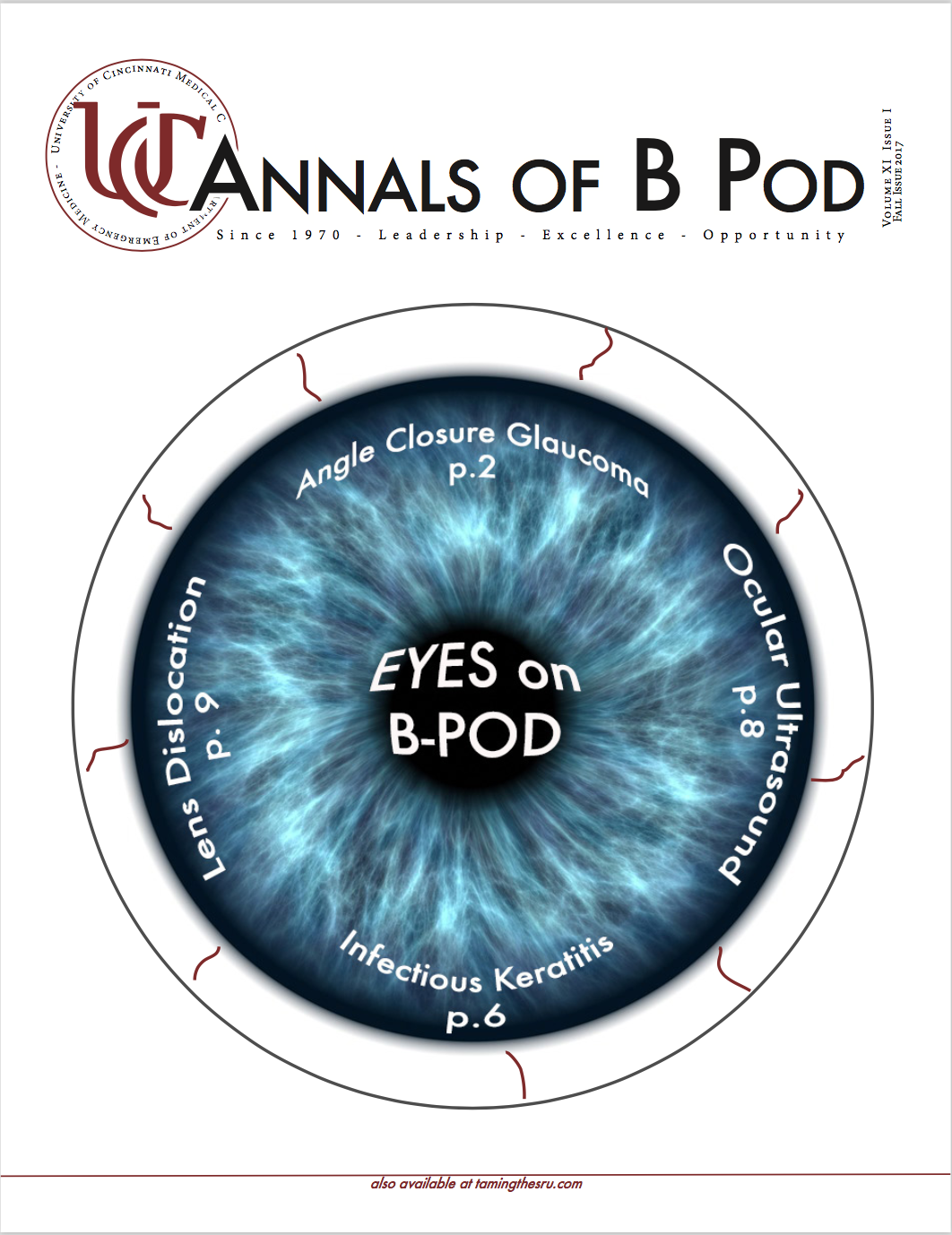
Read MoreIn the Fall 2017 edition of Annals of B Pod, our focus is on ocular emergencies. Dr. Murphy-Crews starts off with a case of acute angle closure glaucoma. This is followed by a detailed discussion of infectious keratitis and a procedure piece focusing on ocular ultrasound. Dr. Jarrell details a case of a traumatic
lens dislocation. In addition to these ophthalmologic-focused articles, Dr. Habib expertly discusses placenta previa and important management techniques of patients with abnormal placentation. The recurring pharmacology article details medication safety in pregnancy. Finally, Dr. Scanlon's EKG Focus discusses the evaluation and management of wide complex tachycardias.
What is the future of airway management in the ED? How can we make our practice more effective and more efficient? In this journal club recap, we focus on 2 topics emerging in the literature - flush rate O2 for pre-oxygenation and head of bed elevation during intubation.
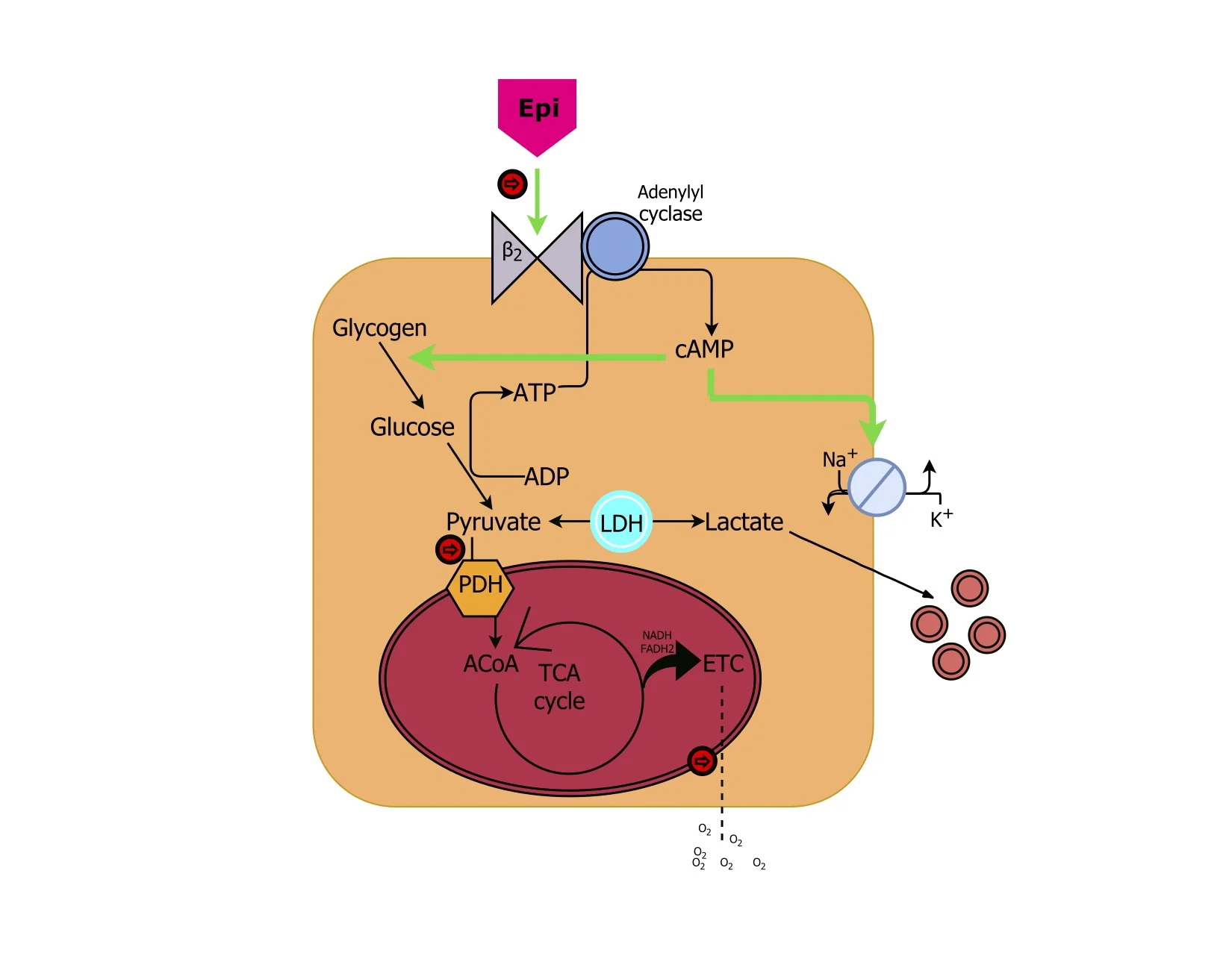
Read MoreSince the turn of the century, lactate has become a mainstay in emergency medicine and critical care laboratories. Some clinicians may hate it, others may love it, but very few can feign apathy on the subject. The utility of lactate in the emergency department and the ICU in guiding resuscitations, predicting mortality, or identifying occult critical illness continues to be discussed in the literature, most fervently in the realm of sepsis. But what are the humble beginnings of this molecule? Most fundamentally, how is lactate generated in the setting of critical illness? And how did it come to be so firmly embedded in our understanding of the pathophysiology of critically ill patients?
Read More'Twas a fantastic grand rounds. Drs. Banning and Golden started it off taking us through the most recent evidence for management of sub-massive and massive PE, as well as presenting their algorithm to be published on Emergency KT. This was followed by a global health lecture given by Dr. Lagasse, which covered a range of re-emerging infectious diseases. Next, Dr. Bryant took us through multiple pediatric cases, and discussed her approach in determining whether to discharge, transfer, or treat pediatric patients with common / representative complaints. Dr. Adeoye then took us through the history and development of our current approach to the management of acute ischemic stroke. Dr. LaFollette then took us through an evidence based approach to removing things from where they shouldn't be in his edition of mastering minor care, discussing approaches to removing retained objects from ears and skin. We then finished the conference with two interesting cases: One presented by Dr. Sabedra that was followed by a discussion on the diagnosis and management of massive hemoptysis, and the other presented by Dr. Dang illustrating the differences and similarities hyperthermic toxidromes including NMS and serotonin syndrome as well as their management.
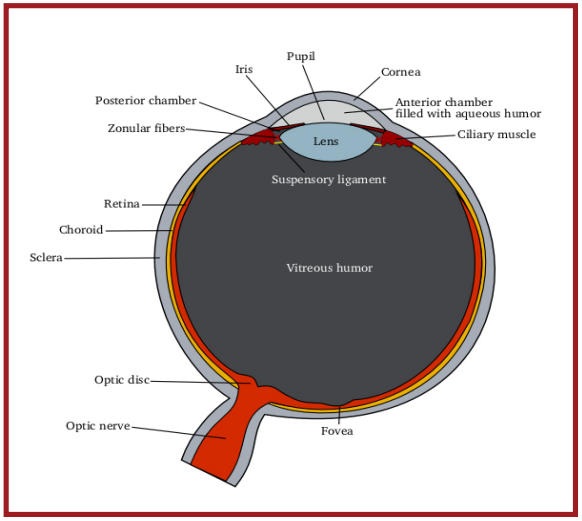
Read MoreFor many emergency physicians, ophthalmologic complaints are seemingly shrouded in mystery and pose a distinct diagnostic and therapeutic challenge. What the heck is gonioscopy? Which eye does OU refer to again? Does latanoprost really change the color of your iris? In this case, we join Dr. Murphy-Crews as he parses the enigma of acute closure glaucoma, its pathophysiology, and the appropriate management in the emergency department.
Read MoreDelivering neonates in the emergency department can be a stressful process, in part due to the potential for serious maternal or infant morbidity. In this article, Dr. Habib will discuss a case of placenta previa and walk us through how to recognize placental pathology, its pathophysiology, and appropriate emergent management.
Read MoreDr. McKinney from our MFM service started us off with some pearls of 2nd and 3rd trimester complications and management. Drs Murphy, Liebman, McKee and Whitford taught small groups about tips and tricks of extensor tendon repair, hip ultrasound and compartment pressures. Dr. Hughes gave us a talk on plain film utility in the ED and finally Drs. Scanlon and Doerning faced off in a CPC of a case of HELLP syndrome.
Read MoreIn this fascinating case, Dr. Jarrell walks us through the initial presentation, evaluation, and management of a traumatic lens dislocation, right before your eyes. Read about this atypical but can't-miss pathology, culminating from a tale of alcohol use, head trauma, and ophthalmology.
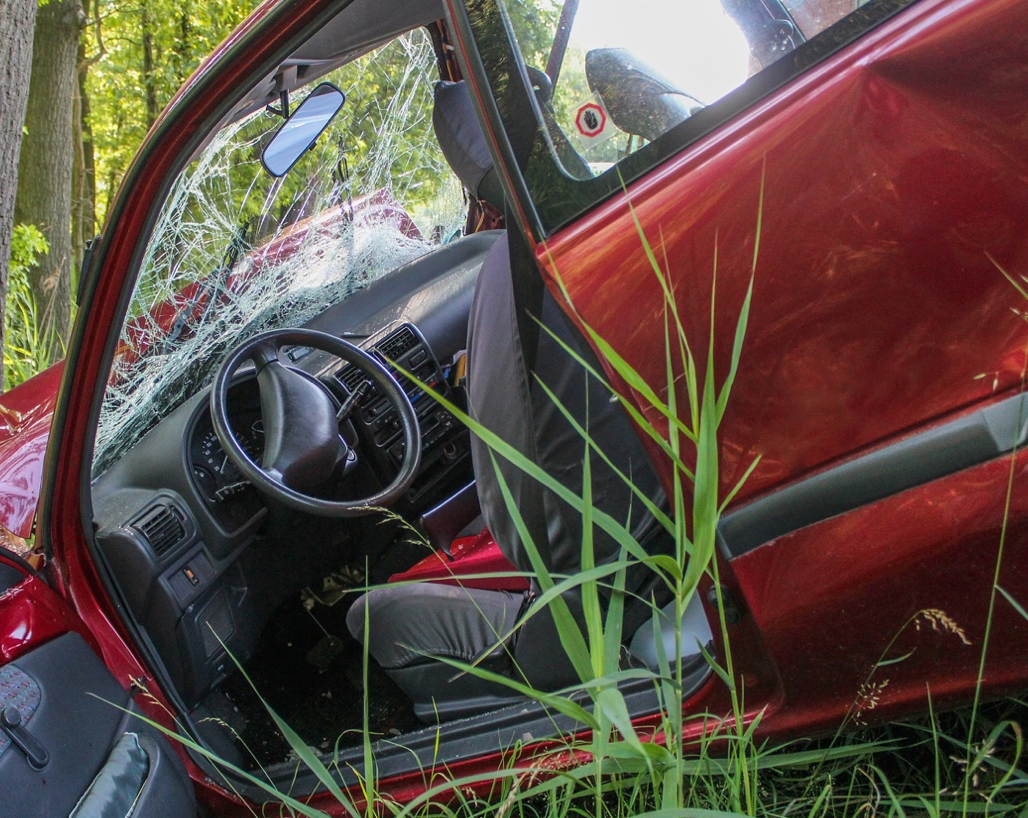
Read MoreThe ultrasound machine has quickly become a fixture in the emergency department. For good reason, the machine often lives in the trauma or resuscitation bay, seemingly anxiously awaiting use. In recent years we have seen multiple protocols and algorithms for the use of ultrasound in differentiating trauma patients. There is no doubt that it can be a powerful tool in these patients, but one must be adept with its use and aware of potential pitfalls in order to use ultrasound effectively in these high pressure situations.
Read MoreSRU (pronounced "shrew") = Shock Resuscitation Unit
Training in, and managing, the SRU is one of the crown jewels of our residency. It is where the sickest of the sick patients are found in our ED. It is a crucible, a test of knowledge and strength, and a true manifestation of the tripartite mission of our department: Leadership, Excellence, and Opportunity.
Training in, and managing, the SRU is one of the crown jewels of our residency. It is where the sickest of the sick patients are found in our ED. It is a crucible, a test of knowledge and strength, and a true manifestation of the tripartite mission of our department: Leadership, Excellence, and Opportunity.
Check out AI contexted information from this and other great FOAMed sites via FOAMCortex