Grand Rounds Recap - 10/22/14

Grand Rounds Recap - 10/22/14

Acetaminophen can be one of the most dangerous drugs in overdose, as the toxic dose of acetaminophen is 250 mg/kg

There are 4 stages of acetaminophen overdose:

  • Stage 1 from 0-24 hours when labs may be normal but the patient has nonspecific symptoms such as nausea, vomiting, and fatigue
  • Stage 2 from 24-72 hours when labs may be normal or be trending upward but the patient is asymptomatic
  • Stage 3 from 72-96 hours when significant metabolic derangement can occur such as profound metabolic acidosis, florid liver failure, and AKI.
  • Stage 4 takes place only if you are able to get them through the acute illness precipitated in Stage 3 when hopefully recovery takes place, though there is no guarantee of liver recovery
Read More

Grand Rounds Recap - 10/15/2014

Grand Rounds Recap - 10/15/2014

Prescription Drug and Opiate Epidemic with Dr. Shawn Ryan

The US is the #1 country in the world for opiate prescription drug utilization

  • The numbers quoted are likely greatly underestimated due to inconsistent documentation
  • Death rate from opiate pain medication (OPM) has quadrupled in the time span of 1999-2010
  • Death rate in 2012 was 5.6 per 100,000
  • In 2011, 44 people per day died from opiate overdose in the US
  • In 2007, unintentional opiate overdose became the leading cause of death in the US for young population
  • OH death rate has grown faster than the national rate. At this time 5 people/day die in OH from opiate overdose
Read More

Grand Rounds Recap - 10/1/2014

Grand Rounds Recap - 10/1/2014

Consultant of the Month Series: Ear Emergencies with Dr. Golub

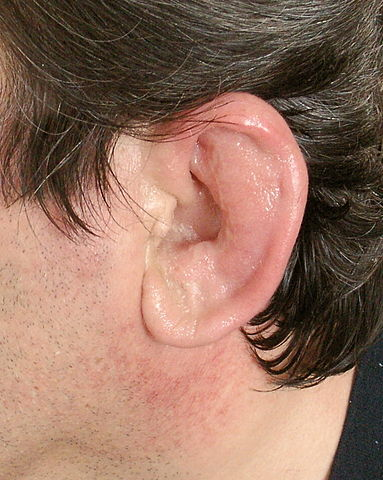
Auricular hematoma

Blood separates the cartilage from the perichondrium which supplies the blood-flow to the cartilage. This can lead to cartilaginous ischemia, infection, deformation (cauliflower ear). Treatment: I+D: make cuts parallel to natural lines in the helix to reduce visible scarring. Place a bolster to close the new potential space. Bolster stays for 7-10days. Keep on Keflex while bolster in place and f/u with ENT. 

Read More

Grand Rounds Recap - 9/24/2014

Grand Rounds Recap - 9/24/2014

Management of the GI bleed (a review of the Cochrane Reviews): 

  • PPI drips have been shown to decrease the rate of rebleed in patients with known peoptic ulcers. It has not been shown to decrease mortality, hospital stay, transfusion need. It also has not been shown to be beneficial in the undifferentiated upper GI bleed and may have a trend toward harm. 
  • Octreotide doesn't improve mortality but on average decreased transfusion requirement by 1/2u product.
  • Antibiotic coverage (treating for gut translocation with ceftriaxone) has been shown to have lowered mortality from infection and all-cause mortality.
  • Prophylactic intubation: 2 retrospective chart reviews came up with contrasting results on mortality outcome after intubating for prophylactic reasons (patient was protecting their airway). 
Read More

Grand Rounds Recap - 9/17/2014

Grand Rounds Recap - 9/17/2014

Radiation in Pregnancy with Dr. Polsinelli

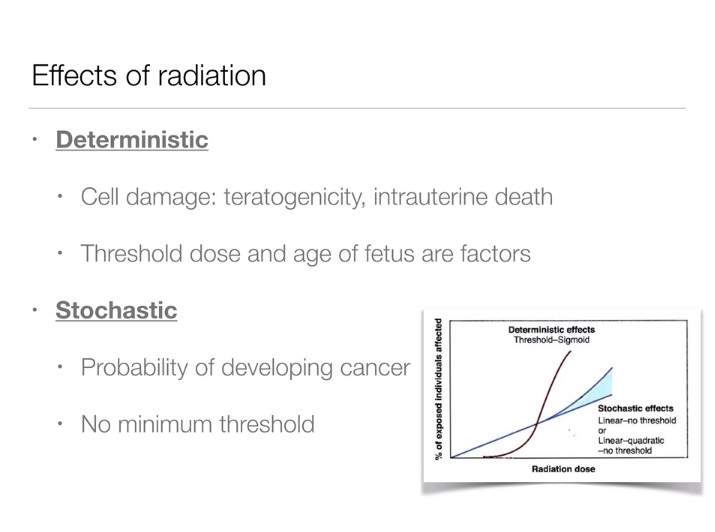
Radiation effects can be deterministic or stochastic. 

  • Deterministic effects cause direct cell damage (radiation burns, teratogenicity, intrauterine death, genetic material damage). There is no evidence of teratogenicity in diagnostic testing radiation ranges (<50mGy). Genetic damage (causing effects in future generations) is theoretical and has not been reported. IUD is a concern, but on a population based scale there was no noted increase in incidence of fetal demise after large scale radiation event and this cannot be studied in vivo.
  • Stochastic effects increase the probability of developing cancer. There is no minimum threshold and increasing dose increases probability. Risk of cancer noted to be ~5% if exposed to 1Gy of radiation. (for comparison maternal radiation is: chest xray = 0.1mGy; CT abd/pelvis 10mGy)
Read More

Interpretation of Head CTs

Interpretation of Head CTs

In the video series below, PGY-1 resident, Dr. Gorder, leads us through the key aspects of CT head interpretation.  Attention is paid to the development of a rigorous systematic approach to review and interpretation of head CTs to aid in the identification of blood, ischemia, mass, signs of increased ICP, as well as fracture.  In the second video, the key anatomic features seen on head CT's are covered.

Read More

Radiation in Pregnancy

Radiation in Pregnancy

In the first of two posts preparing for Grand Rounds in the coming week, PGY-1 EM resident, Dr. Polsinelli, guides through the murky waters of radiation exposure during pregnancy.  She offers a background on what radiation is, how it's measured, the effects of radiation on the fetus, and radiation doses associated with common diagnostic exams.

Read More

Enter the FOAM

Enter the FOAM

This past Wednesday, I had the pleasure of giving a lecture on FOAM to the UC Emergency Medicine Residency.  Well, it wouldn't quite be a lecture on FOAM if I didn't make it freely available to all after I finished it all up.  You can check out the lecture slides on slideshare embedded at the bottom of the post.  I also recorded the lecture and broke it down into a series of 5-ish minute long videos which you can look at based on your area of interest.

Read More

The Approach to Abdominal X-rays

The Approach to Abdominal X-rays

Utility of the imaging modality aside, abdominal radiographs can be a bit of a challenge to interpret.  With a number of possible techniques (cross table laterals, left lateral decubitus, AP, upright, or supine) and a lot of structures to evaluate (is that small bowel or large bowel?, is that a kidney stone or an infamous phlebolith?), it's pretty easy to stare at a film and zone out as you eye moves from one shade of gray to another.

In the embedded video below, PGY-1 resident, Dr. Julie Teuber goes through a standardized approach to reading the abdominal x-ray that hopefully help keep your eyes from going cross-eyed next time you need to interpret an acute abdominal series.

Read More

Grand Rounds Recap - 8/20/14

Grand Rounds Recap - 8/20/14

An Update on CHF w/ Dr. Fermann

The phenotype of acute presentation of heart failure can be dramatically different. Consider the difference between the hypotensive patient who has very poor cardiac output now in cardiogenic shock requiring pressors (these have a very poor outcome), the normotensive patient who has slowly become retained fluid, and the acutely hypertensive patient who presents in extremis (who actually does quite well even though they are so sick on arrival).

Read More

Grand Rounds Recap - 8/13/2014

Grand Rounds Recap - 8/13/2014

R4 Simulation Series: Genitourinary Emergencies with Dr. Moschella and Dr. Verzwyvelt

  • Fournier's Gangrene (ie necrotizing fasciitis of the perineum): Case simulation of 19 yo M with tachycardia, hypotension, altered mental status found to have erythema, induration, and crepitus of the perineum. Initial steps are aggressive treatment of sepsis (broad spectrum antibiotics to cover skin and gut flora as this is commonly polymycrobial) and early surgical debridement. Either Urology of Acute Care Surgery will mobilize to perform the debridement.
  • Oral boards case: Consider ovarian torsion in young female with acute onset pain in lower abdomen or pelvis. You may find adnexal fullness or tenderness on exam. Diagnostic test of choice is transvaginal duplex ultrasound. Remember to include ectopic pregnancy, appendicitis, TOA in your differential.
Read More

Grand Rounds Recap - 7/27/2014

Grand Rounds Recap - 7/27/2014

M&M Learning Points with Dr. Stull:

  • Severe asthma exacerbations require considerable effort to avoid furthering acidosis while attempting to stabilize, secure airway, and maintain oxygenation. Use Mag early as there is evidence that you can reduce admissions by providing this treatment early. Consider BiPAP to improve ventilation while preparing for definitive airway management but there is no evidence that it reduces intubations. Ketamine as the RSI induction agent may provide some bronchodilatory effect but there is not enough data to provide any formal recommendations. For this same reason, ketamine as a post-intubation sedation agent may be appropriate. Vent management is key with a focus on low respiratory rate and short inspiratory times to lengthen the I:E ratio (>1:3) to allow full exhalation. Goal TV 6-8cc/kg, "ZEEP" or low PEEP (0-5mmHg), consider a plateau goal of ~25 if you paralyze
Read More

Grand Rounds Recap - 7/23/14

Grand Rounds Recap - 7/23/14

n general, the best way to learn is to challenge yourself.  Teaching styles should take into account different learner types and levels

Learner levels:

  • Beginner: early 3rd year medical student
    • Can be an observer initially but transition these learners to the next stage
    • Keeps you on point as you have to really know what you are talking about
    • Incorporate them into your H+P
    • Transitional: ask them to perform supervised H+Ps as this prevents them from developing bad habits
    • Advanced:OMP (one minute preceptor) or SNAPPS model
Read More

Grand Rounds Recap - 7/16/14

Grand Rounds Recap - 7/16/14

Oral Boards Case with Dr. Blomkalns

The pt is a 70 yo M who presents with AMS, weakness and nausea for 1-2 days. He complains of diffuse weakness and feeling "sick". His hx is significant for HTN, HLD, CHF and he takes digoxin. Vital signs on arrival are BP 90/60 with HR 47. There is concern for digoxin toxicity, so dig level is obtained and is 2.4

(normal is less than 1.2).

His K is 6 and Cr is 1.9. EKG shows LBBB.

Read More