One of the hallmarks of being an emergency medicine physician is the ability to care for anyone at any time, no matter the presentation, time of day, or age of the patient. Withdrawal syndromes can have nuanced presentations, with crossover in symptom presentations and limited treatments that can often leave us wishing we could do more. As emergency medicine physicians, our most important task is identifying life threatening presentations that need immediate intervention. This article aims to highlight the presentations of common withdrawal syndromes (outside the spectrum of more commonly discussed alcohol and opioid withdrawals).
Background
National data on withdrawal syndromes presenting to the emergency department (ED) are limited. Substance use accounts for roughly 1 in 11 ED visits, and a proportion of those are related to withdrawal (1). In one study of two urban EDs, 6.6% of patients in their ED were concerned about the possibility of going into withdrawal (2). Both of these studies focus on substance use disorders, especially opioids. However, neither study focuses on non-opioid withdrawals and the consideration of withdrawal that is independent of a substance use disorder. This post highlights withdrawal syndromes from a different angle – what non-alcohol, non-opioid withdrawal syndromes should we be ready to treat in the ED? How do we identify them and appropriately disposition them? Below we have put together a list of cases for both life-threatening withdrawal syndromes and non-life-threatening withdrawal syndromes less commonly discussed.

Microsoft Copilot. (2026). Three red prescription pill bottles with tablets and capsules [AI-generated image]. Microsoft Copilot.
LIFE-THREATENING Withdrawal Syndromes:
Case 1: A 34-year-old male presents to the ED with concerns for insomnia, he states he has been unable to sleep for the past few days. On evaluation you notice a patient who appears severely anxious, has a noticeable tremor, is tachycardic, and is reporting nausea. You take a brief history and find that he denies alcohol use, has a history of anxiety, and has been out of his medications due to insurance issues.
What is this Syndrome?
Benzodiazepine withdrawal!
This presentation closely resembles alcohol withdrawal but is a mimic and often overlooked without a good medication review. With his history of anxiety, this patient is likely a chronic user of benzodiazepines for long-term anxiety management. The biggest difference is often time to withdrawal - for alcohol, withdrawal is relatively predictable in a 72-hour time course, whereas benzo withdrawal varies widely from hours to 7+ days depending on pharmacology.
Classic Symptoms of Withdrawal (4):
Common symptoms include increased feeling of anxiety, insomnia, restlessness, tremor, nausea, and autonomic hyperactivity (tachycardia, hypertension, low grade fever, diaphoresis).
Life threatening symptoms can include agitation, seizures, paranoid thoughts, hallucinations, and delirium.
Mechanism of Withdrawal (3,4,5):
Benzos, like alcohol, enhance GABA at the GABA-A receptor. As a reminder, glutamate and GABA neurotransmitters act as the primary "on" and "off" buttons of the central nervous system, working in opposing mechanisms to regulate cortical excitability. With chronic use of benzos or alcohol, the brain downregulates GABA-A receptors and upregulates glutamate receptors. Therefore, abrupt withdrawal of GABA agonistic drugs leads to unopposed glutaminergic excitation.
Withdrawal severity increases with dose and duration of use.
Onset of Symptoms (3,4):
If medication was short acting, it can take hours and/or up to 3 days; if long acting, it is estimated at 5 to 10 days.
Treatment/Disposition (5):
Treat with a benzodiazepine taper of equal strength to current use.
Most benzos can substitute for another, meaning that you can use longer acting agents such as PO diazepam and chlordiazepoxide similar to how mild - moderate alcohol withdrawal is treated. Most patients can be managed as an outpatient with aggressive ER treatment and objective improvement in symptoms.
Admit for a higher level of care for:
History of complicated withdrawal (seizure, delirium).
Current severe withdrawal symptoms as above.
Unstable co-occurring medical or psychiatric illness (i.e. seizure disorder).
Acute suicidality or self-harm risk.
History of moderate-to-severe alcohol withdrawal (cross tolerance predicts worse benzo withdrawal).
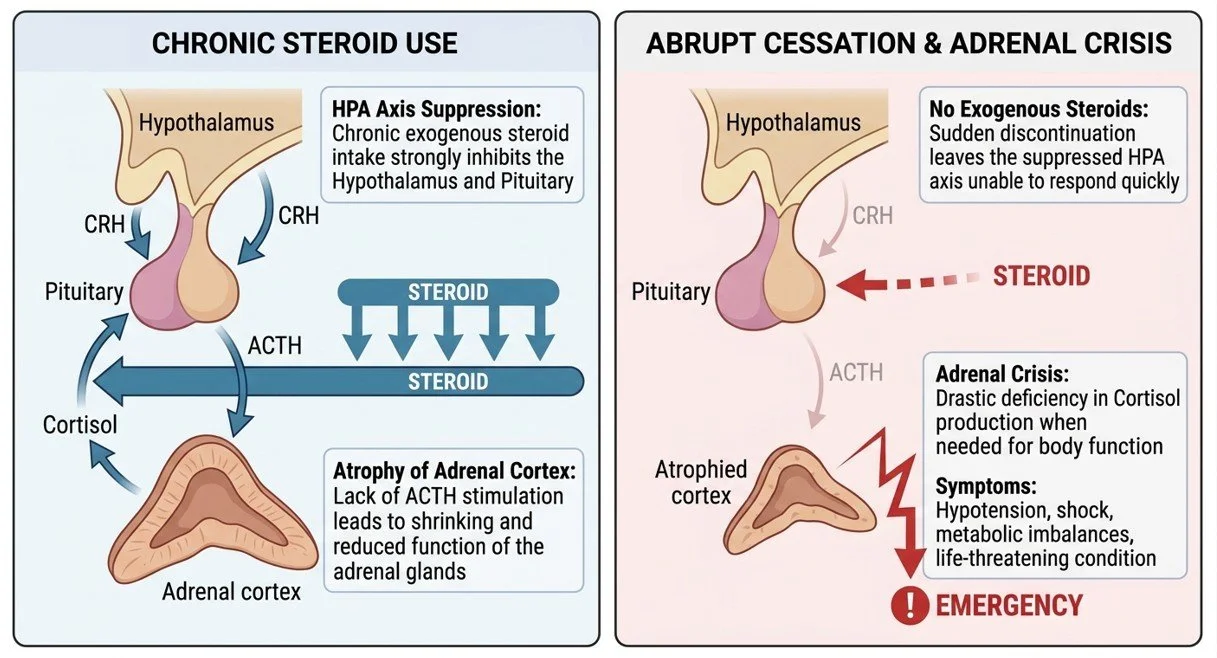
Google Gemini. (2026). Steroid Use and Abrupt Cessation & Adrenal Crisis [AI-generated image]. Google Gemini.
Case 2: A 55-year-old female presents to the ED with concern for altered mental status, myalgias, and somnolence. The patient is found to be hypotensive and in shock, requiring immediate resuscitation. She is found to have a UTI, and is treated with antibiotics, but the patient continues to be hypotensive despite appropriate fluid resuscitation and pressor use. Of note, the patient has a history of severe emphysema and takes several chronic daily suppressive medications for this but has not been taking her medications for a few days due to her altered mental status.
What is this Syndrome?
Glucocorticoid withdrawal syndrome aka adrenal crisis!
This presentation is concerning as the decompensated shock seems out of proportion to its trigger. The patient is likely on long-term glucocorticoids for her emphysema which produces secondary adrenal insufficiency (7), and stopping them can precipitate adrenal crisis.
Classic Symptoms of Withdrawal (7):
Adrenal insufficiency is more chronic and nonspecific - fatigue, arthralgias/myalgias, sleep disturbances, and changes in mood. These can be present with or without withdrawal of the medication but are more pronounced after a long taper of glucocorticoids.
Adrenal crisis is more acute and severe - hemodynamic instability / shock out of proportion to trigger and treatment, and hallmark electrolyte disturbances (hyponatremia, hypoglycemia). Triggered by acute cessation of higher doses of long term corticosteroids.
Mechanism of Withdrawal (7):
Chronic exogenous steroids suppress the HPA axis causing decreased hypothalamic CRH release and decreased pituitary ACTH production and ultimately can cause atrophy of the adrenal cortex. Responsiveness of the adrenal cortex to ACTH stimulation. When steroids are withdrawn, the central ACTH output recovers but the atrophied adrenal cortex cannot produce adequate cortisol, and this is unmasked under conditions of physiologic stress (i.e. sepsis).
Onset of Symptoms (7,8):
For patients on long-term supraphysiologic doses of steroids (>3 weeks), withdrawal can precipitate during a taper or after acute cessation. Symptoms can begin within days of a taper, and sometimes more acutely within hours after acute cessation or missed doses. Mild adrenal insufficiency symptoms can last for months to years after a taper due to slow recovery of the HPA axis, and patients should be counseled accordingly.
Treatment/Disposition (6,25):
For mild withdrawal/insufficiency symptoms, re-initiation of the patient's home dose prior to taper is appropriate if symptoms are mild.
If the patient is presenting with concern for adrenal crisis, give IV/IM Hydrocortisone 100mg bolus and additional doses based on clinical response following. Also treat with aggressive fluid resuscitation as needed for BP support, and correction of underlying hypoglycemia or hyponatremia if present; if the patient is in crisis they will need admission to ICU level of care.
To PREVENT insufficiency or crisis, any patient on current or recent supraphysiologic glucocorticoids who is under physiologic stress (fever, infection, trauma, surgery) needs their dose increased prior to and for the duration of the stressor.
Case 3: A 60-year-old male presents to the ED with concern for fever and altered mental status. On exam you find the patient to have increased spasticity, dark colored urine, and appears to be responding to internal stimuli. On palpation of the abdomen, you notice an implanted device appears to be present in the RLQ. His past medical history is significant for cerebral palsy.
What is this Syndrome?
Baclofen withdrawal!
This presentation is most concerning for baclofen withdrawal in the setting of an intrathecal baclofen pump. Malfunction leading to abrupt discontinuation of baclofen or dose reduction can precipitate withdrawal in patients who are reliant on an intrathecal pump.
Classic Symptoms of Withdrawal (9,10):
In order from mild to severe - mild - return of baseline spasticity, pruritus, paresthesias; moderate - hypotension / labile BP and tachycardia (autonomic dysreflexia), fever, confusion; severe- hallucinations, high fever, seizures, rhabdomyolysis, DIC, multi-organ failure
Mechanism of Withdrawal (9):
Baclofen is a GABA-B agonist mediated through calcium channels. These receptors are predominately in the spinal cord and constant stimulation results in downregulation of receptors over time, so the only agonism of the receptor is from the drug itself. This means that when the baclofen is withdrawn, you have increased neuronal excitability that becomes unopposed all of a sudden.
Onset of Symptoms (9):
Hours to a few days, with severe cases progressing to organ failure within 1-3 days of cessation
Diagnosis/Pitfalls (9,10):
Diagnosis is clinical but can be aided by clues, including identification of a baclofen pump. Xrays can be obtained to look for kinks or disconnection of wires, and there are programmers that can be held over the pump to interrogate them for malfunction.
Treatment/Disposition (11):
Primary management is focused on restoring the intrathecal pump to use at or near the previous dose. Some of the mild withdrawal symptoms can be treated with benzodiazepines or oral baclofen as a bridge, but because these both have different mechanisms than intrathecal baclofen, they may not fully stop progression of symptoms to more severe withdrawal depending on the dose in the pump. Very high doses of oral baclofen (up to 150 mg/day) may be required if being used to bridge for intrathecal.
If the pump cannot be restored quickly, providers can consult services to help with delivery of baclofen through a lumbar puncture bolus. Refractory cases with severe symptoms of seizures, hyperthermia, etc. may require intubation and propofol.
Dantrolene can be used for severe hyperthermia, but this is not an FDA approved indication and is based on case report data.
NON-LIFE-THREATENING Withdrawal Syndromes:
Case 1: 23-year-old male presents to the ED with concern for suicidal ideation. He states over the last week he has become increasingly depressed and has lost pleasure in doing things he enjoys. He also endorses difficulty sleeping with bad dreams. He has a history of ADHD, and states he frequently took more than he was supposed to because he liked how it made him feel. The patient discloses that he has been trying to stop using both his prescribed stimulants in addition to stopping recreational drugs.
What is this Syndrome?
Stimulant withdrawal! (prescribed medication for ADHD)
This is a presentation showing a patient experiencing predominantly depressive symptoms, likely due to withdrawal of stimulants. Withdrawal is most common or severe when taking a higher dose. The concurrent use of recreational stimulant drugs can certainly worsen withdrawal symptoms if both are stopped at once. However, after discontinuing prescription therapy, symptoms of withdrawal are usually mild, so depression symptoms or suicidal ideation that are prolonged or severe should prompt evaluation for underlying primary mood disorder.
Classic Symptoms of Withdrawal (12):
Depression or suicide ideation
Insomnia OR hypersomnia
Nightmares
Psychomotor slowing OR agitation
Changes in appetite
Onset of Symptoms (12):
Within 12-24 hours of discontinuation, depressed mood can last for weeks to months.
Mechanism of Withdrawal (12, 26):
Stimulants increase synaptic dopamine and norepinephrine. Chronic stimulation of dopaminergic receptors causes a downregulation in receptors. When the drug is stopped, due to the down regulation of receptors, a hypodopaminergic and catecholamine depleted state result, causing the “crash” and withdrawal symptoms.
Treatment/Disposition (12):
Supportive treatment; educate patients on good sleep hygiene, over the counter sleep-aids, Tylenol or ibuprofen for muscle aches.
Psychosocial referrals for behavioral interventions.
Withdrawing from stimulants is non-life threatening, these patients may be safely discharged home in the appropriate context. Some patients may need inpatient psychiatric monitoring for severe suicidality.
Case 2: 40-year-old female presents to the ED with her partner who is concerned she has not been acting like herself recently. They describe the patient as irritable and “not fun to be around.” She has recently been trying to work on her health and has started eating healthier and working out more. In addition to this, she decided she is done smoking. She reports increased hunger, feelings of anger, brain fog, and anhedonia.
What is this Syndrome?
Nicotine withdrawal!
Irritability being a hallmark of symptom presentation makes these patients sometimes difficult in the ED setting. However, emergency medicine physicians can play a key role in assisting withdrawal symptoms to encourage smoking cessation, as up to 50% relapse within one week, and only about 6% of people who quit are still abstinent at one year (14).
Classic Symptoms of Withdrawal:
Irritability
Anger
Anxiety
Reduced concentration
Restlessness
Depression
Increased appetite
Insomnia.
Onset of Symptoms (14):
Peak within 2 days of quitting, improve within a few weeks, although cravings can last for months to years.
Mechanism of Withdrawal (27):
Nicotine stimulates nicotinic acetylcholine receptors and triggers dopamine release. Chronic use upregulates these receptors, thus when nicotine is stopped, the dopamine surge “reward” pathways are left unstimulated, which drives cravings and irritability.
Treatment/Disposition (14, 28):
In the ED setting, treatment is aimed at reducing symptoms. Nicotine replacement therapy is the hallmark and can be started in the emergency department. Additionally, bupropion may be considered in the right patient population.
Dosing of bupropion is typically 150mg daily for 3 days and then 150mg BID.
Dosing of nicotine replacement therapy is variable and primarily depends on route of administration and patient’s packs per day.
Nicotine replacement therapy comes in multiple forms including lozenges, gum, patch, inhaler, spray, oral mist.
Providing at least two forms of nicotine replacement is the standard based on addiction research for best success at reducing cravings and symptoms of withdrawal.
Case 3: A 23-year-old male presents with concern for body aches, generalized malaise, headaches, and dizziness. He states these symptoms have been present for the past 10 days and he has found no relief. The patient has concern that this is now interfering with his daily life. He recently moved and has been unable to establish with primary care and has a known diagnosis of depression and has not been able to fill his medications.
What is this syndrome?
Anti-depressant withdrawal!
Given this patient’s history, it is very likely he has been monitored and treated with long-term antidepressants (SSRIs) for his depression. Often times, patients present to the emergency room when they first move to an area due to limited access to medical providers. Withdrawal from antidepressants can be frustrating and studies are showing that it is increasingly more common than we may have thought. One meta-analysis found that antidepressant withdrawal syndrome has an incidence of about 42.9%; including abrupt cessation and gradual tapers. A later study found that with placebo comparison, likely only about 15% of patients end up having withdrawal syndromes from abrupt cessation, with severe symptoms happening in about 2% of cases (17,35).
Classic Symptoms of Withdrawal (17, 32):
In one study, the most common symptom was “brain zaps” (described as a brief sudden sensation of an electric shock in the head) (49%), irritability (34%), dizziness (30%) and nightmares (28%).
FINISH is a great mnemonic to remember the withdrawal symptoms:
Flu like symptoms,
Insomnia
Nausea
Imbalance
Sensory disturbances
Hyperarousal.
Onset of Symptoms (18):
2-4 days after discontinuation, lasting around 1-2 weeks.
Mechanism of Withdrawal (17):
Mechanisms driving SSRI withdrawal syndrome are similar to above withdrawals - constant stimulation at the serotonin receptors leading to downregulation, and abrupt cessation causes a decrease in synaptic serotonin that is difficult to compensate for quickly.
Treatment/Disposition (18):
These patients may be discharged home as withdrawal from antidepressants does not precipitate life threatening consequences/symptoms. Whether or not the ED provider should reinstate the antidepressant has mixed data and would suggest deferring patient to primary doctor vs psychiatrist as patients will need long-term monitoring on these medications.
It is reasonable to consider a short term bridge prescription if someone has close follow up.
Case 4: 29-year-old female with known schizophrenia presented to the ED after being found wandering in the woods. Her clothes appear disheveled and she does not make eye contact on evaluation. When speaking to her in the room she is hypervigilant and seems to be responding to internal stimuli. In speaking with her family, she had been missing for a few days, and presumably hasn’t taken her medications since not being home for the last few days.
What is this Syndrome?
Anti-psychotic withdrawal!
This patient is at high risk of withdrawal from antipsychotics. Withdrawal from clozapine is the classic high risk. Especially in the analysis of clozapine, patients who discontinued were at high risk of withdrawal psychosis. The greatest concern is that withdrawal from antipsychotics can present a clinical picture that is similar to the primary psychiatric insult and may be confused with primary psychosis. Non-adherence (intermittent missed doses) is much less likely to cause severe withdrawal symptoms in comparison to abrupt cessation (22).
Classic Symptoms of Withdrawal (31,32):
Antipsychotic discontinuation can cause withdrawal symptoms in three categories:
Somatic/cholinergic rebound (nausea, vomiting, diaphoresis, headache, diarrhea).
Motor (akathisia, withdrawal dyskinesia, parkinsonism).
Psychological (anxiety, agitation, psychosis).
Onset of Symptoms (24):
Ranges from a few days to 4+ weeks
Withdrawal hyperkinesia
Mechanism of Withdrawal (33,34):
Chronic dopaminergic inhibition leads to hypersensitivity at dopamine receptors that is unmasked when the drug is stopped. This mechanism facilitates the psychological and motor symptoms associated with antipsychotic withdrawal.
Antipsychotics (depending on class) also work on non-dopaminergic pathways including cholinergic, histaminergic, adrenergic, and serotonergic pathways, which cause cholinergic hyperactivity on rebound.
Treatment/Disposition:
Mild withdrawal can be discharged if the patient can be contracted for safety. If concerns for acute psychosis persist, engaging inpatient psychiatry is reasonable for slow taper reinstatement of antipsychotics.
The ED physician should probably refrain from restarting home antipsychotics for more severe withdrawal without the direction of psychiatry colleagues due to the limited data on this topic.
cONCLUSION
Withdrawal syndromes are often complex and master mimickers, sometimes presenting as sepsis, psychosis, viral illness, or relapse of depression. In any patient with vague symptoms, a careful medication reconciliation is essential. "Ran out of refills" or "too sick to take my pills" is a withdrawal history until proven otherwise. Our first job is to sort by danger. Benzodiazepine, intrathecal baclofen, and glucocorticoid withdrawal can be life-threatening. Stimulant and nicotine withdrawal are miserable but rarely dangerous. For anti-depressants and anti-psychotics, withdrawal “syndromes” are less common (having a relapse of symptoms that led to needing the Rx is much more common). Restarting the drug is often the treatment, with clozapine as the notable exception. For milder syndromes, the ED visit is a chance to connect patients to primary care or psychiatry for a safe, gradual taper.
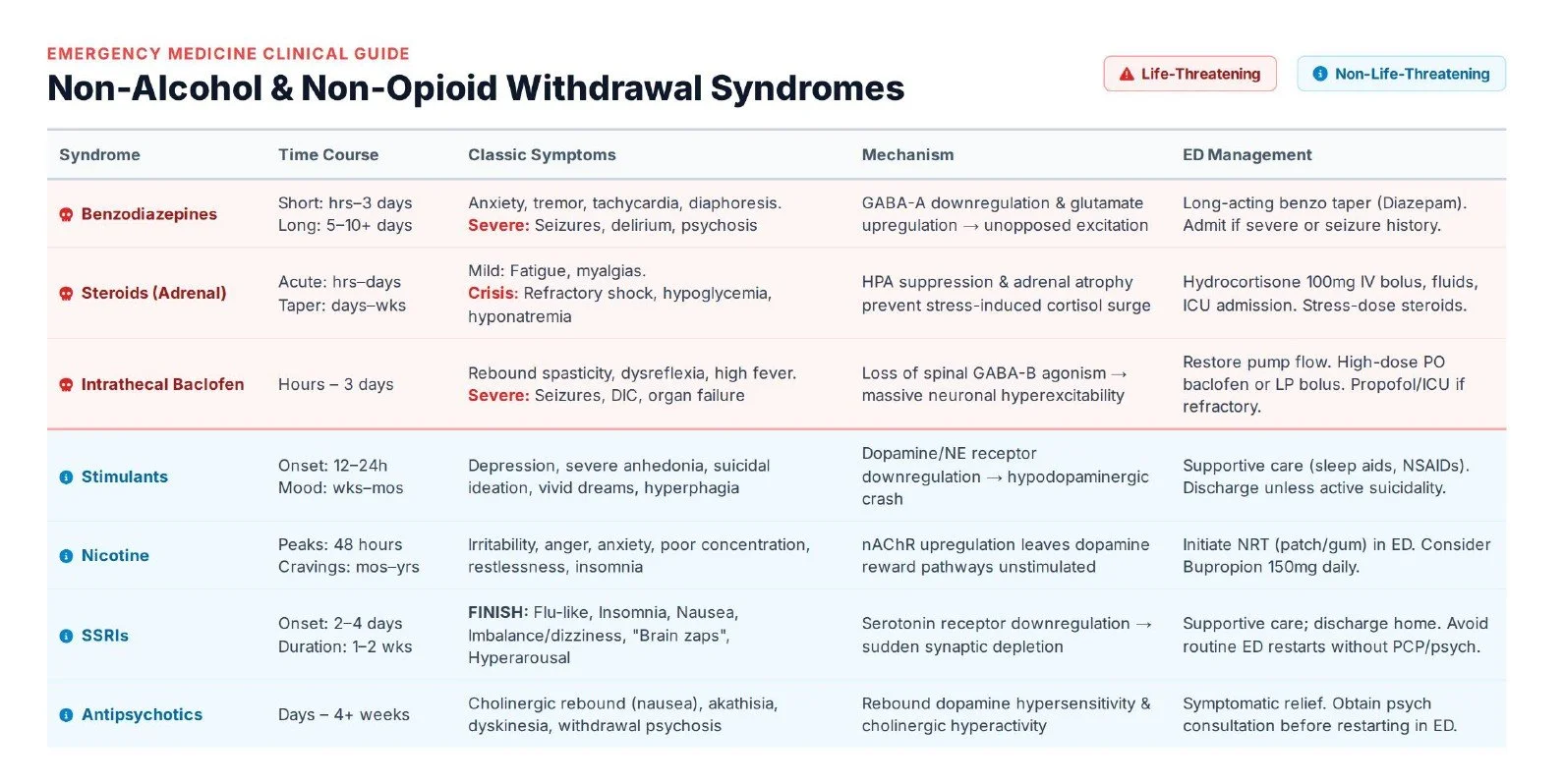
Google Gemini. (2026). Non-Alcohol & Non-Opioid Withdrawal Syndromes Summary Table [AI-generated image]. Google Gemini.
Post by: Hannah sloan, MD
Dr. Sloan is a PGY-1 in Emergency Medicine at the University of Cincinnati
Editing by: Anita Goel, MD
Dr. Anita Goel is an APD in Emergency Medicine at the University of Cincinnati and Co-editor of Tamingthesru.com
CO-Editing by: Haley Escheman, mph
Haley is a Program Administrator at the University of Cincinnati College of Medicine
References
Zhang, X., Wang, N., Hou, F., Ali, Y., Dora-Laskey, A., Dahlem, C. H., & McCabe, S. E. (2021). Emergency Department Visits by Patients with Substance Use Disorder in the United States. The western journal of emergency medicine, 22(5), 1076–1085. https://doi.org/10.5811/westjem.2021.3.50839
London, K. S., Hurwitz, B., Davis, J., Warrick-Stone, T., Cherney, A., Randolph, F., Bradley-O'Toole, B., Deis, K., & Alexander, K. (2025). "Are you worried about going into withdrawal today?" Retrospective analysis of single-question, patient-centered screen for substance use and care linkage. The American journal of emergency medicine, 96, 69–74. https://doi.org/10.1016/j.ajem.2025.06.017
Butler, M., & Salisbury-Afshar, E. (2026). Benzodiazepine tapering: Joint guidelines from the American Society of Addiction Medicine. American Family Physician. Accessed October 30, 2026. https://www.aafp.org/afp/2026/0600/practice-guidelines-benzodiazepine-tapering
Soyka, Michael. “Treatment of benzodiazepine dependence.” New England Journal of Medicine, vol. 376, no. 12, 23 Mar. 2017, pp. 1147–1157, https://doi.org/10.1056/nejmra1611832.
American Society of Addiction Medicine, American Academy of Addiction Psychiatry. Joint Clinical Practice Guideline on Benzodiazepine Tapering. Published March 2025. Accessed October 30, 2026. https://www.acmt.net/wp-content/uploads/2025/03/BZD-Tapering-Document-Final-Approved-Version-for-Distribution-03-03-25.pdf
Vaidya, A., Findling, J., & Bancos, I. (2025). Adrenal Insufficiency in Adults: A Review. JAMA, 334(8), 714–725. https://doi.org/10.1001/jama.2025.5485
Beuschlein, F., Else, T., Bancos, I., Hahner, S., Hamidi, O., van Hulsteijn, L., Husebye, E. S., Karavitaki, N., Prete, A., Vaidya, A., Yedinak, C., & Dekkers, O. M. (2024). European Society of Endocrinology and Endocrine Society Joint Clinical Guideline: Diagnosis and therapy of glucocorticoid-induced adrenal insufficiency. European Journal of Endocrinology, 190(5), G25–G51. https://doi.org/10.1093/ejendo/lvae029
Sali, E., Paschou, I. A., Dimopoulou, S. M., Tagka, A., Chasapi, V., Nicolaidou, E., Stratigos, A. J., Peppa, M., & Paschou, S. A. (2026). Glucocorticoids: an enemy or a friend for the dermatologist? recommendations for proper use and safe discontinuation. Endocrine, 91(1). https://doi.org/10.1007/s12020-026-04778-2
Iqbal, M., Modi, P., Sehgal, K. et al. Clinical Presentations and Treatment of Baclofen Toxicity and Withdrawal: A Systematic Review. CNS Drugs 40, 419–449 (2026). https://doi.org/10.1007/s40263-025-01254-9
DailyMed - LIORESAL (BACLOFEN)- baclofen kit LIORESAL (BACLOFEN)- baclofen injection. (2022). Nih.Gov. https://dailymed.nlm.nih.gov/dailymed/drugInfo.cfm?setid=6f3bdcc0-ffc8-4911-8c35-958c8103a2c5
Gburek-Augustat, J., Krause, M., Bernhard, M. et al. Unusual mechanical failures of intrathecal baclofen pump systems: symptoms, signs, and trouble shooting. Childs Nerv Syst 37, 2597–2604 (2021). https://doi.org/10.1007/s00381-021-05154-3
https://www.aaap.org/wp-content/uploads/2023/11/stud_guideline_document_final.pdf[2]
Gorelick, D. A. (2023). Cannabis-Related Disorders and Toxic Effects. New England Journal of Medicine, 389(24), 2267–2275. https://doi.org/10.1056/nejmra2212152
Selby, P., & Zawertailo, L. (2022). Tobacco Addiction. New England Journal of Medicine, 387(4), 345–354. https://doi.org/10.1056/nejmcp2032393
van Dam, R. M., Hu, F. B., & Willett, W. C. (2020). Coffee, Caffeine, and Health. New England Journal of Medicine, 383(4), 369–378. https://doi.org/10.1056/nejmra1816604
Silverman, K., Evans, S. M., Strain, E. C., & Griffiths, R. R. (1992). Withdrawal Syndrome after the Double-Blind Cessation of Caffeine Consumption. New England Journal of Medicine, 327(16), 1109–1114. https://doi.org/10.1056/nejm199210153271601
Zhang, MM., Tan, X., Zheng, YB. et al. Incidence and risk factors of antidepressant withdrawal symptoms: a meta-analysis and systematic review. Mol Psychiatry 30, 1758–1769 (2025). https://doi.org/10.1038/s41380-024-02782-4
Davies, J., & Read, J. (2018). A systematic review into the incidence, severity and duration of antidepressant withdrawal effects: Are guidelines evidence-based? Addictive Behaviors, 97. https://doi.org/10.1016/j.addbeh.2018.08.027
DailyMed - GABAPENTIN solution. (2025). https://dailymed.nlm.nih.gov/dailymed/drugInfo.cfm?setid=6d3fd1f9-c831-4262-af10-291838a53541
Mersfelder, T. L., & Nichols, W. H. (2015). Gabapentin. Annals of Pharmacotherapy, 50(3), 229–233. https://doi.org/10.1177/1060028015620800
Evoy, K.E., Drain, D., Pedigo, J. et al. Misuse of Pregabalin and Gabapentin: A Second Systematic Review Update. Drugs 86, 1365–1378 (2026). https://doi.org/10.1007/s40265-026-02342-w
Barnes, T. R., Drake, R., Paton, C., Cooper, S. J., Deakin, B., Ferrier, I. N., Gregory, C. J., Haddad, P. M., Howes, O. D, Jones, I., Joyce, E. M., Lewis, S., Lingford-Hughes, A., MacCabe, J. H., Owens, D. C., Patel, M. X., Sinclair, J. M., Stone, J. M., Talbot, P. S., … Yung, A. R. (2019). Evidence-based guidelines for the pharmacological treatment of schizophrenia: Updated recommendations from the British Association for Psychopharmacology. Journal of Psychopharmacology, 34(1), 3–78. https://doi.org/10.1177/0269881119889296
McCutcheon, R. A., Taylor, D., Rubio, J., Nour, J., Pillinger, T., Murray, R. M., & Jauhar, S. (2024). Does Slow and Steady Win the Race? Rates of Antipsychotic Discontinuation, Antipsychotic Dose, and Risk of Psychotic Relapse. Schizophrenia bulletin, 50(3), 513–520. https://doi.org/10.1093/schbul/sbad139
Brandt, L., Schneider-Thoma, J., Siafis, S., Efthimiou, O., Bermpohl, F., Loncar, L., Neumann, K., Hasan, A., Heinz, A., Leucht, S., & Gutwinski, S. (2022). Adverse events after antipsychotic discontinuation: an individual participant data meta-analysis. The lancet. Psychiatry, 9(3), 232–242. https://doi.org/10.1016/S2215-0366(22)00014-1
Rushworth, R. L., Torpy, D. J., & Falhammar, H. (2019). Adrenal crisis. New England Journal of Medicine, 381(9), 852–861. https://doi.org/10.1056/nejmra1807486
Sinclair, J. M., Kalk, N. J., Kaar, S. J., Agabio, R., Arunogiri, S., Bisaga, A., Chesney, E., Daly, C., Dewhurst, J., Freeman, T. P., Ghosh, A., Hemrage, S., Leggio, L., Lingford-Hughes, A., Matheson, C., McKetin, R., Paterson, L. M., Roberts, E., Robson, D., … Welch, S. (2026). Evidence-based consensus guidelines for the pharmacological management of substance dependence: Recommendations from the British Association for Psychopharmacology. Journal of Psychopharmacology (Oxford, England), 2698811251399593. https://doi.org/10.1177/02698811251399593
Benowitz, N. L. (2010). Nicotine addiction. New England Journal of Medicine, 362(24), 2295–2303. https://doi.org/10.1056/nejmra0809890
DailyMed - bupropion hydrochloride SR- bupropion hydrochloride tablet, film coated, extended release. (2024). Accessed October 30, 2026. https://dailymed.nlm.nih.gov/dailymed/drugInfo.cfm?setid=a591e33a-52f0-41c8-a00b-4a1afcc3dc4c
Le Foll, B., Tang, V. M., Rueda, S., Trick, L. V., & Boileau, I. (2024). Cannabis use disorder: From neurobiology to treatment. Journal of Clinical Investigation, 134(20). https://doi.org/10.1172/jci172887
Zhu, K., Born, D. W., & Dilli, E. (2020). Secondary headache: Current update. Headache, 60(10), 2654–2664. https://doi.org/10.1111/head.13986
Salomon, C., Hamilton, B., & Elsom, S. (2014). Experiencing antipsychotic discontinuation: Results from a survey of Australian consumers. Journal of Psychiatric and Mental Health Nursing, 21(10), 917–923. https://doi.org/10.1111/jpm.12178
Vinkers, C. H., Kupka, R. W., Penninx, B. W., Ruhé, H. G., van Gaalen, J. M., van Haaren, P. C. F., Schellekens, A. F. A., Jauhar, S., Ramos-Quiroga, J. A., Vieta, E., Tiihonen, J., Veldman, S. E., Veling, W., Vis, R., de Wit, L. E., & Luykx, J. J. (2024). Discontinuation of psychotropic medication: A synthesis of evidence across medication classes. Molecular Psychiatry, 29. https://doi.org/10.1038/s41380-024-02445-4
Horowitz, M. A., Murray, R. M., & Taylor, D. (2021). Tapering antipsychotic treatment. JAMA Psychiatry, 78(2), 125–126. https://doi.org/10.1001/jamapsychiatry.2020.2166
Brandt, L., Schneider-Thoma, J., Siafis, S., Efthimiou, O., Bermpohl, F., Loncar, L., Neumann, K., Hasan, A., Heinz, A., Leucht, S., & Gutwinski, S. (2022). Adverse events after antipsychotic discontinuation: An individual participant data meta-analysis. The Lancet. Psychiatry, 9(3), 232–242. PubMed. https://doi.org/10.1016/S2215-0366(22)00014-1
Henssler J, Schmidt Y, Schmidt U, Schwarzer G, Bschor T, Baethge C. Incidence of antidepressant discontinuation symptoms: a systematic review and meta-analysis. Lancet Psychiatry. 2024;11(7):526-535. doi:10.1016/S2215-0366(24)00133-0