
Tamingthesru

Riding the Waves: End-Tidal CO2 Monitoring
End-Tidal CO2 monitoring has a variety of uses in the Emergency Department. Whether used diagnostically or for monitoring of a patient’s physiology, clinicians must possess an understanding of the information that you can gather from EtCO2 waveform tracings. Knowing how to interpret the waveforms makes EtCO2 much more than a number, allowing the clinician to gain insight into minute to minute changes in a patients physiological state.

Diastolic Shock Index: A clinically relevant predictor of poor outcome in septic shock?
Early recognition and resuscitation of patients in septic shock are critical skills for an emergency medicine physician. Many clinical decision-making tools have been developed and validated in their use to identify and define those who are in sepsis or septic shock, as well as predict a patient’s overall risk of morbidity and mortality, including tools like the SIRS criteria and SOFA score. The diastolic blood pressure is determined by vascular tone, and thus it can be assumed that a decrease in the diastolic blood pressure should correlate with the pathologic vasodilation in septic shock. As a result, the authors of this study hypothesized that the relationship between heart rate and the diastolic blood pressure (i.e. the diastolic shock index) could provide providers a tool to quickly identify patients that are at risk for unfavorable outcomes.
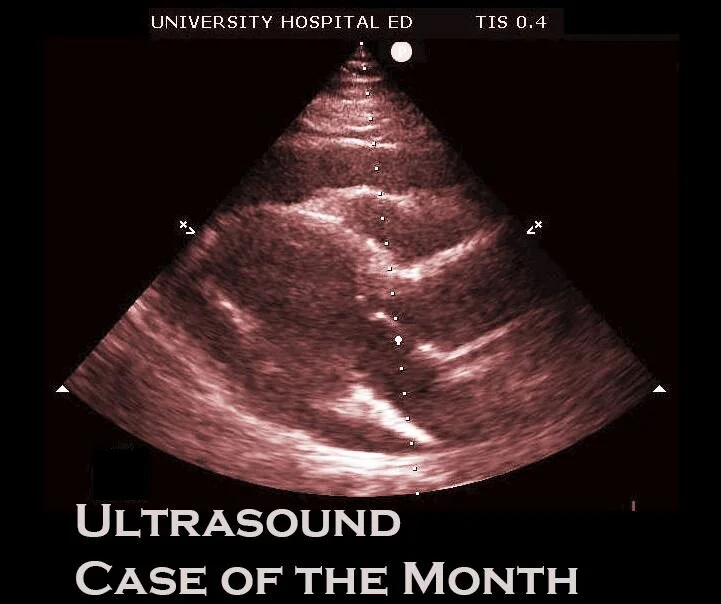
US Case of the Month: Ultrasound RUSHes to the Rescue
The diagnostic ability of undifferentiated hypotension by the Emergency Physician has increased exponentially with the RUSH examination. Join Dr. Frederick as she searches and finds the source of hypotension in an elderly female in December’s Ultrasound Case of the Month