
Welcome to the new Tamingthesru
Same great content - new look - improved search

Grand Rounds Recap 10/14
Reviewing our own neuroimaging just got a little easier with expertise shared by Dr. Knight. Trauma resuscitations just got a little more evidence-based with Journal Club covering VL>DL, IO>IV, and arginine vasopressin administration. Our kindness, attitude, and desire to take breaks all can improve with the help of Dr. Li’s R4 Capstone. Finally, Quarterly Sim/Oral Boards covered the spectrum of pediatric DKA with cerebral edema, to PTA, to trauma in the elderly, highlighting the breadth and depth of emergency medicine.

Non-Invasive Estimation of Optimal PEEP
As a general rule, mechanical ventilation of obese patients is more complex and difficult than in those with a normal body habitus. Obese patients have decreased chest wall compliance due to increased truncal adiposity, amongst other factors. They are also predisposed to other comorbidities that can lead to more involved physiologic challenges.
Critical Care Transport teams commonly transport patients who are intubated and mechanically ventilated. These patients are intubated for a variety of reasons, from altered mental status to hypercapnea to hypoxia. One of the more common challenges we face in our patients who are mechanically ventilated is difficulty with oxygenation – whether the patient is suffering primary or secondary hypoxemic respiratory failure.
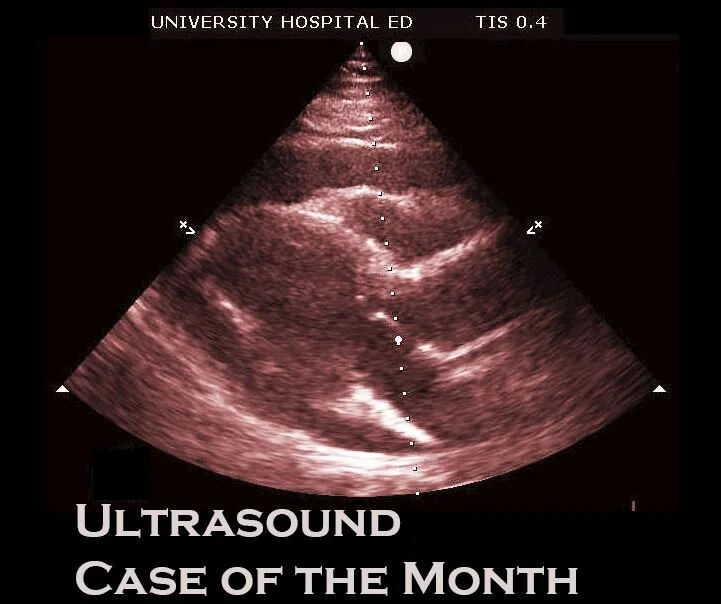
US Case of the Month: October
Chest wall trauma can be exceedingly painful, predisposing patients to splinting, atelectasis, and pneumonia. Chest wall nerve blocks provide analgesia and can facilitate necessary procedures. Dr. Hassani takes us through a case of through a case of traumatic pneumothorax with chest tube placement, and the serratus anterior block.