Welcome to the new Tamingthesru
Same great content - new look - improved search
Grand Rounds Recap March 30, 2016
M&M with Dr. LaFollette
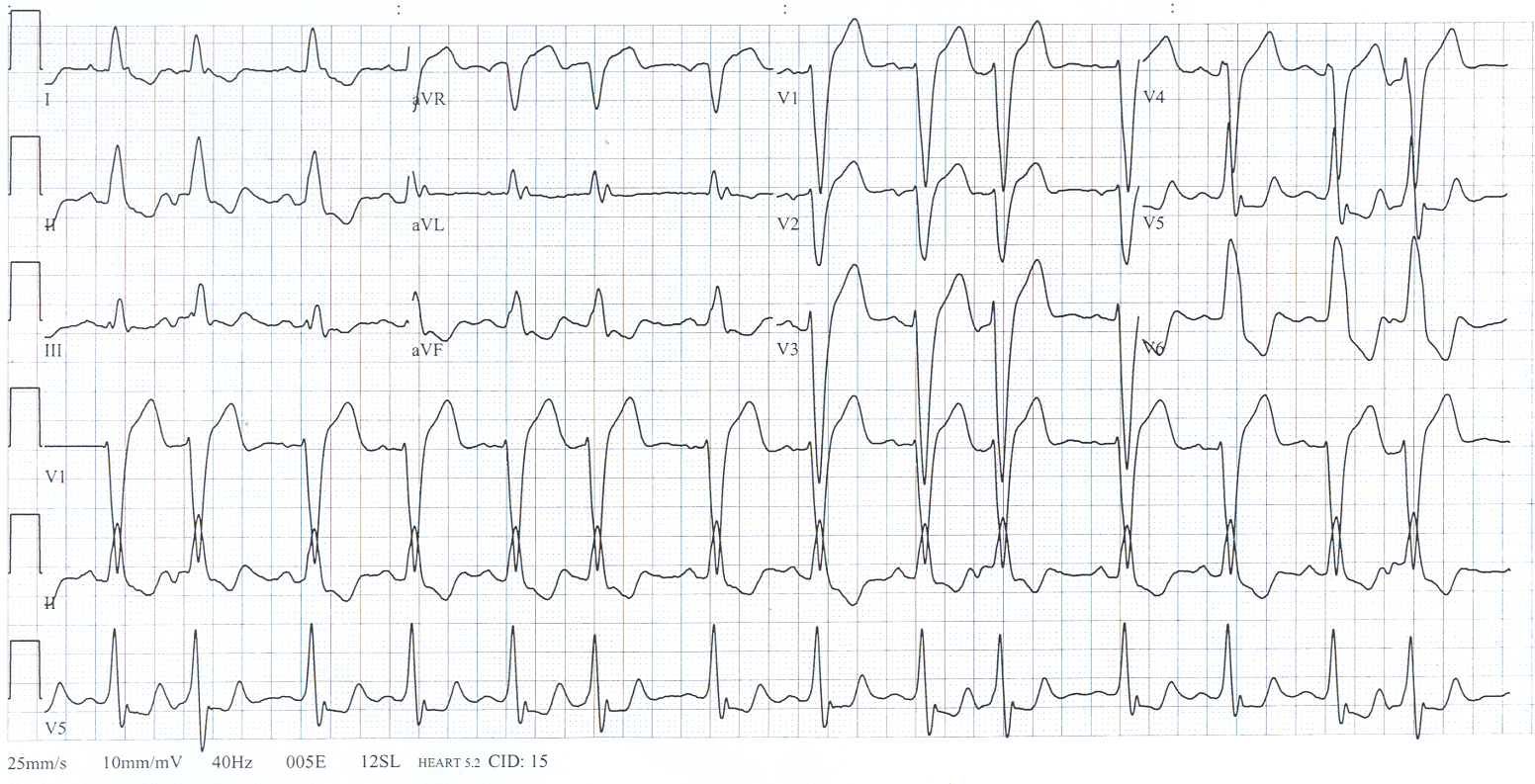
Modified Sgarbossa Criteria to aid in diagnosing STEMI in the setting of LBBB
- Can be used in the setting of induced (paced) LBBB
- Unweighted scoring (any of the following indicates STEMI equivilance)
- Concordant ST elevation
- Concordant ST depression in V1,V2,V3
- Inappropriate discordance of >25% ST elevation / S wave amplitudes
- Improves your test metrics from the original criteria from sens/spec of 36%/96% to 80%/99% respectively in a new validation study

If it Bleeds, it Leads………
It’s late on a Saturday night and you are moonlighting as the single provider at a community hospital about 15 minutes from UC. You’re trying to disposition five current patients when a new patient is brought in by EMS with a complaint of vomiting blood. The patient smells of alcohol and states that he drinks daily, though he may have “overdone it” the last 2-3 days since he has had friends in town...

Thoracentesis
General Considerations
Both the diagnostic and therapeutic thoracenteses are performed using a similar technique. The major difference is the amount of fluid removed. The proceduralist may also choose to only use the needle technique as opposed to the needle-catheter unit when obtaining fluid for diagnostic purposes only.
It is generally recommended that needle size be limited to 18-gauge or smaller to minimize risk of pneumothorax and damage to nearby structures.
US-guided thoracentesis is associated with a significantly lower rate of complications and has become the standard of care. (1) Real-time ultrasound (US) guidance is recommended for small or loculated effusions when there is concern that the diaphragm or lung tissue is <10mm from the pleural surface. It is also recommended in patients with relative contraindications such as coagulopathies and the mechanically ventilated patient.