
Welcome to the new Tamingthesru
Same great content - new look - improved search

Transporting Intra-Aortic Balloon Pump Patients by Air Care
Many historians argue that the first use of aeromedical evacuation was during the Siege of Paris in 1870, using hot air balloons (though there seems to be some question regarding the truth of this claim). We're still using balloons during air medical missions in 2014, albeit in a much different way.
The efficacy of IABPs has recently been called into question; see Cliff Reid's recent blog post at http://resus.me/double-balloon-pump-fail/ . Regardless, the decision to initiate IABP therapy isn't going to be ours. But the challenge of moving an extraordinarily sick patient receiving this therapy WILL be ours. We must be ready. How?
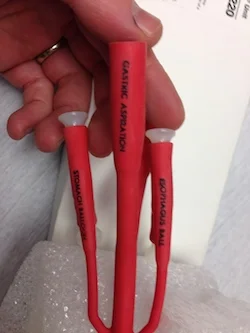
Lessons in Transport - Upper GI Bleeding
It is 2am on a cold, dark, winter night and you are dispatched to a small rural hospital to transport a patient by ground with a GI bleed back to UCMC medical ICU. Enroute dispatch notifies you that your patient has deteriorated and is profoundly hypotensive. The ED physician at the outside hospital is attempting intubation for airway control. On arrival you find a middle-aged male with all the classic stigmata of end-stage liver disease. More importantly he has a systolic blood pressure of 60 and a HR of 130. A literal fountain of blood spews from the patients mouth, around a successfully placed endotracheal tube, and is now beginning to pool on the floor. You know this patient needs massive resuscitation from his likely bleeding esophageal varices... but you are 55 minutes by ground to UCMC and know that your patient will not survive the transport unless something is done to control the bleeding...
Resuscitation of Penetrating Trauma Patients
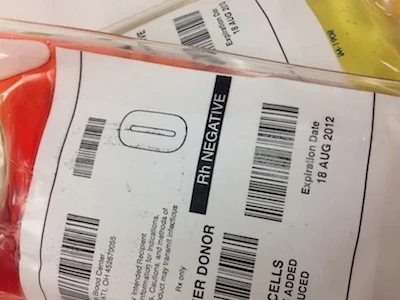
In our last podcast we covered the basics of the evaluation of the patient with blunt trauma. We switch gears a little bit this week and focus a little more on penetrating trauma. In this podcast, Dr. Hinckley and Dr. Chris Miller discuss several facets of the care of penetrating trauma patients including the initial approach and evaluation, detection of subtle presentations of shock, and triggers to initiate transfusion of blood products. In this accompanying blog post, I’d like to focus primarily on why we might want to withhold fluids on penetrating trauma patients.